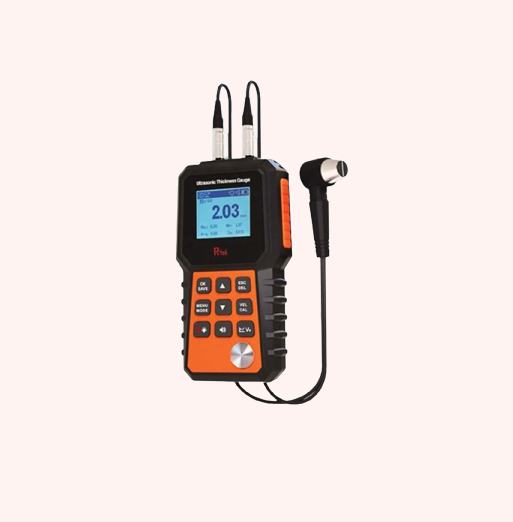
An Ultrasonic Thickness Gauge is a non-destructive testing instrument used to measure the thickness of materials by sending high-frequency ultrasonic waves through the test object and measuring the time taken for the waves to return.
It is used to measure the thickness of metals, pipes, tanks, vessels, plastics, glass, and other suitable materials without cutting or damaging the test object.
Yes. Ultrasonic Thickness Gauges are widely used for Non-Destructive Testing (NDT) because they can measure material thickness without damaging or dismantling the component.
Yes. It is widely used for monitoring material thickness loss caused by corrosion, erosion, and wear. Regular measurements can help identify areas where material has become dangerously thin.
The probe, also called a transducer, sends ultrasonic waves into the test material and receives the reflected echoes. The instrument uses this information to calculate the material thickness.
Thickness is commonly displayed in millimeters (mm) or inches (in). The available measurement units depend on the instrument model.
The key advantages include non-destructive testing, quick measurement, portability, accurate thickness monitoring, corrosion assessment, and the ability to measure materials from one accessible side.